Bay Garage Systems
Licensed & Insured
MHIC License # 167012
Serving Harford County, Baltimore County, Cecil County, and nearby Maryland communities.


Services
If you’ve started looking into garage floor coatings, you’ve probably heard about epoxy. Maybe a neighbor had it done, or perhaps you’ve heard about floors that peeled or turned yellow after a few summers. That usually comes down to how the coating was chosen and installed.
Here’s something most homeowners don’t know until they ask. Many of the garage floors we install today aren’t epoxy. They’re polyaspartic, a newer type of coating that most people have never heard of, and it addresses several of the concerns homeowners bring up about garage floor coatings.
From our base in Belcamp, Bay Garage Systems installs polyaspartic floor coatings for homes across Harford, Baltimore, and Cecil Counties. Jason Strozier, who owns the company, has several years of hands-on experience with epoxy, polyurea, and polyaspartic floors, and he personally oversees every floor. Most garage floors are finished in about a day.
Bay Garage Systems
Polyaspartic Floors at a Glance
- Ready to use: walk on it the next day, park on it within 72 hours
- Layers: a polyurea or moisture vapor barrier base coat under a polyaspartic topcoat
- Prep: mechanical grinding with dust control on every floor
- Finish: solid colors, more than 100 flake colors, custom blends, or decorative quartz, sealed with a polyaspartic topcoat
- Experience: several years installing epoxy, polyurea, and polyaspartic floors
- Warranty: 5-year workmanship warranty plus a limited lifetime warranty

Bay Garage Systems
What Is Polyaspartic?
Polyaspartic is a floor coating that goes on as a liquid and hardens into a tough, glossy surface bonded to your concrete. It belongs to the polyurea family of coatings, which are known for curing quickly and staying flexible. Every floor we install gets a polyaspartic topcoat. Underneath it, we use either a polyurea base coat or a moisture vapor barrier, which is a base coat that blocks moisture coming up through the slab. We choose based on the condition of your concrete and how much moisture it holds.
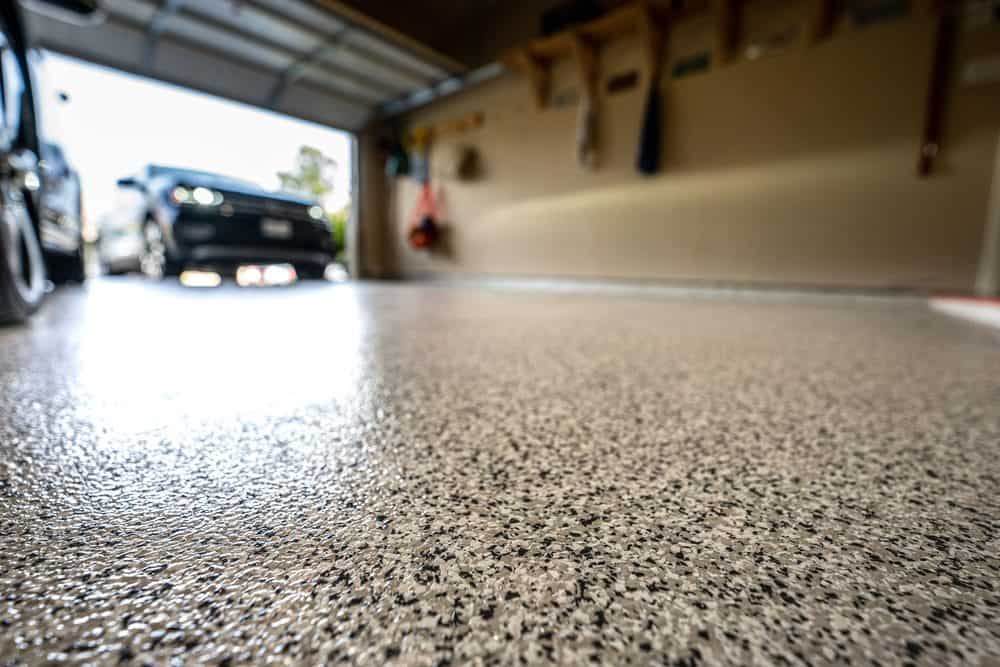
On a garage floor, polyaspartic is usually paired with decorative vinyl flakes. The flakes add color and texture, help hide dust and small marks, and give the surface a bit of grip. A clear coat over the top seals everything in and gives the floor its finished shine.
You don’t need to understand the chemistry to choose the right garage floor. But you should know how it will hold up over time and what makes polyaspartic different from other coatings.
Bay Garage Systems
Why Homeowners Choose Polyaspartic Over Epoxy
You get your garage back fast. Polyaspartic cures much faster than most epoxy, so you can walk on your new floor the next day and park on it within 72 hours of installation. For a family that needs the garage, that difference matters.
It moves with your concrete. Concrete expands and shrinks a little with every change in temperature, and Maryland has plenty of those. Polyaspartic flexes with the slab instead of fighting it, which helps prevent the cracking and peeling that can happen when a rigid coating can’t keep up.
It handles hot tires and road salt well. After a summer drive, hot tires can soften some coatings and lift them right off the floor. Polyaspartic is built to hold up to hot tires, along with oil, antifreeze, and the salty slush you track in every winter.
It resists yellowing in the sun. Epoxy can yellow or fade over time when sunlight hits it, which is a real problem in a garage with windows or a door that stays open on nice days. Polyaspartic resists that fading, so the floor keeps its color better in sunlight.
Polyaspartic vs. Epoxy at a Glance
| Polyaspartic | Epoxy | |
|---|---|---|
| Ready to use | Walk on it the next day, park within 72 hours | Longer cure time, varies by product |
| Sunlight | Resists yellowing and fading | Can yellow over time in sunlight |
| Flexibility | Flexes with concrete movement | More rigid |
| Hot tires and chemicals | Built to hold up to hot tires and road salt | Varies by product and prep |
| Upfront cost | Higher | Usually lower |
| Best fit | Daily-use garages, sunny spaces, outdoor areas | Budget-focused or lower-traffic spaces |
Epoxy is a great choice for many concrete floors, especially indoor spaces where you want a durable, seamless finish with plenty of color and decorative options. It can also be a more budget-friendly choice, depending on the project. Visit our epoxy flooring page to learn more about the options we offer and how we install it.
Bay Garage Systems
The Trade-Offs to Know About
No floor coating is perfect for every garage, and polyaspartic is no exception. It usually costs more upfront than epoxy. Many homeowners decide the faster turnaround and better color retention are worth it, but it’s still a bigger investment. The price depends on the size of the floor, the condition of the concrete, any repairs it needs, and the finish you choose, and we give you clear options and pricing when we look at your garage.
It isn’t a do-it-yourself product. Because polyaspartic cures so quickly, it has to be mixed and spread fast and evenly, which takes experience and the right equipment. That’s also why polyaspartic is a job for a professional installer.
Any glossy floor can get slick when it’s wet. The flakes add texture, and if slip resistance matters for your space, we’ll talk through your options before we start.
It still depends on good preparation. A polyaspartic coating is only as strong as its bond to the concrete underneath, so skipping prep leads to peeling no matter which coating is used.
Bay Garage Systems
Where Polyaspartic Works Well
Garages are where we install it most. Polyaspartic is also used on other concrete surfaces such as patios and porches, and you can ask us about your space during your consultation. Because it resists fading in sunlight, it works especially well outdoors and in bright rooms, where sunlight can yellow some other coatings over time.
Bay Garage Systems
Colors and Finish
You can keep it simple with a solid color or add some personality with decorative flakes. We offer solid-color floors, more than 100 flake colors, custom flake blends, and decorative quartz flooring systems. A flake finish is a popular choice for garage floors, with options that range from soft grays and tans to darker mixes that hide tire marks. You can browse the flake colors we offer on our epoxy flooring page before your consultation, and we can show you flake samples in person so you can see them in your own garage lighting.


Bay Garage Systems
What Happens on Install Day
All you need to do is clear out the garage. We handle the rest.
Every floor starts with mechanical grinding. A grinder opens up the surface of the concrete so the coating can bond to it, and we run it with dust control to keep the mess out of your home. We repair cracks and damaged spots next, then apply the base coat, which is either polyurea or a moisture vapor barrier depending on your concrete. Next we broadcast the flakes and finish with a polyaspartic topcoat.
A typical two-car garage floor is done in one working day. Give it a day before you walk on it and about three days before the car goes back in. We’ll walk you through exactly what that looks like for your garage before we leave.
Bay Garage Systems
Why Homeowners Choose Bay Garage Systems for Their Floors
Jason Strozier founded Bay Garage Systems after years of working on garage doors and floors, and he oversees every floor project personally, from the first look at your concrete to the final coat. Our installers are background-checked and insured. You can learn more About Bay Garage Systems and how the company got started.
Because we also handle garage door installation and garage storage, we can help you plan the whole space at once. Plenty of homeowners finish the floor first, then add cabinets or wall storage once they see how good the space looks.
Giving back to the Chesapeake Bay is part of how we work. For every completed floor coating project, Bay Garage Systems donates $35 to organizations dedicated to protecting and preserving the Bay, primarily through the Chesapeake Bay Foundation’s Save the Bay initiative.
Our Floor Coating Warranty
Polyaspartic floors installed by Bay Garage Systems come with a 5-year workmanship warranty and a limited lifetime warranty on our professionally installed floor coating systems. We’ll go over what each one covers before work begins, so you know what to expect long after the floor is down.
Serving Harford, Baltimore & Cecil Counties
We install polyaspartic floors for homeowners across Harford County, including Bel Air, Fallston, and Forest Hill, as well as communities in Baltimore and Cecil Counties. See our full service area for more.

TESTIMONIALS
What Our Customers Say
Google Review
“When Jason came out to discuss my project, he had such a professional yet calm demeanor that I knew immediately I wanted to work with him on my project. Today, he and Javier did my garage floor and I am beyond pleased. They arrived on time, communicated with me throughout the day, and cleaned up after themselves. I was also appreciative & impressed when they helped me get some final things moved outside and made sure that everything was secured. My floor looks amazing and I would highly recommend them to do your floor or garage door. Thank you so much Jason & Javier!!”
Google Review
FAQ’S
Polyaspartic Floor Coating FAQs
Is polyaspartic better than epoxy?
It depends on the space. For a garage you park in every day, especially one that gets sun, polyaspartic is usually the better fit because it cures faster, resists yellowing, and flexes with the concrete. For a basement or lower-traffic area, or when budget matters most, epoxy can be a great choice.
How long does a polyaspartic garage floor take to install?
Usually one day for a standard garage. Walking on it is fine the next day, and parking is fine within 72 hours, under typical conditions.
Is polyaspartic the same as polyurea?
They’re closely related. Polyaspartic is part of the polyurea family of coatings, and both cure quickly and stay flexible. On many of our floors, a polyurea base coat sits under the polyaspartic topcoat.
Does a polyaspartic floor get slippery?
It can be when it’s wet, the same as any glossy surface. The flake texture helps, and we’re happy to go over grip options during your consultation.
Can polyaspartic be used outdoors?
Yes. Because it resists fading in sunlight, polyaspartic works well on patios and porches as well as inside the garage.
Do I need to do anything to get my garage ready?
Just clear out the space. We take care of grinding, crack repair, and every coat after that.
Is there a warranty on polyaspartic floors?
Yes. Every professionally installed polyaspartic floor coating system comes with a 5-year workmanship warranty and a limited lifetime warranty.
Why do some garage floor coatings peel?
Peeling almost always comes back to preparation. If the concrete isn’t ground and cleaned properly, the coating can’t bond to it, no matter how good the product is.
How much does a polyaspartic garage floor cost?
Floor size, concrete condition, repairs, and the finish you choose all affect the price. After we see your garage, we’ll lay out your options and what each one costs.
Get Started
See What Polyaspartic Could Do for Your Garage
If you’ve been on the fence about epoxy, or you just want a floor you can walk on tomorrow, give us a call at (410) 807-8886. We’ll look at your concrete, show you flake samples, and give you an honest recommendation on which coating fits your garage.
Accuracy check by Jason Strozier, who owns and runs Bay Garage Systems. He has spent several years installing epoxy, polyurea, and polyaspartic floors by hand. The company holds Maryland MHIC license #167012 and is insured. Our license status is listed with the Maryland Home Improvement Commission. Last reviewed: October 2026.
“Jason did a phenomenal job on my garage floor. 10/10 recommend to anyone who is looking for floor coating. Super flexible and thorough. Asked him to do a custom color that no other company wanted to do and he made it happen no questions asked.”